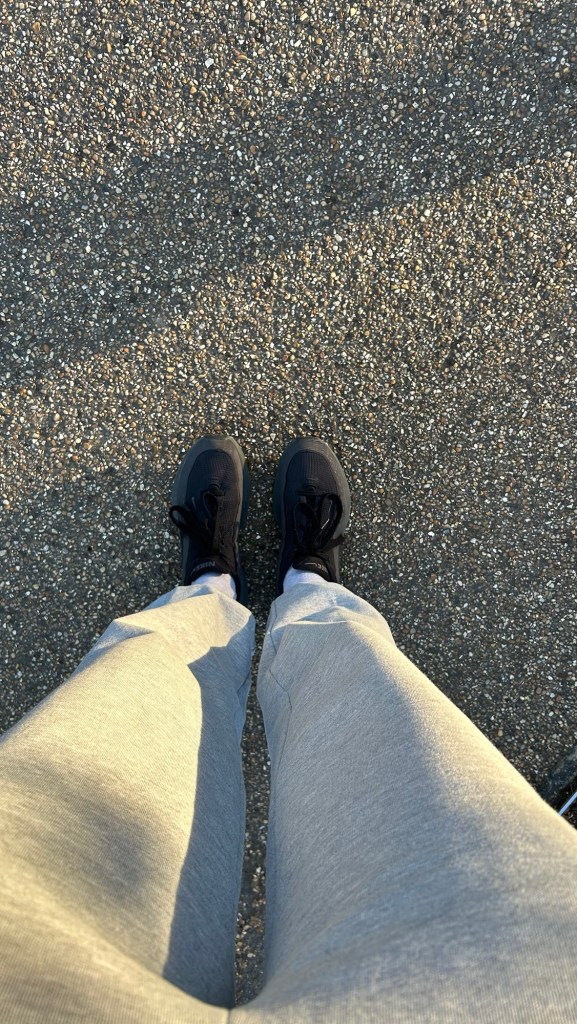
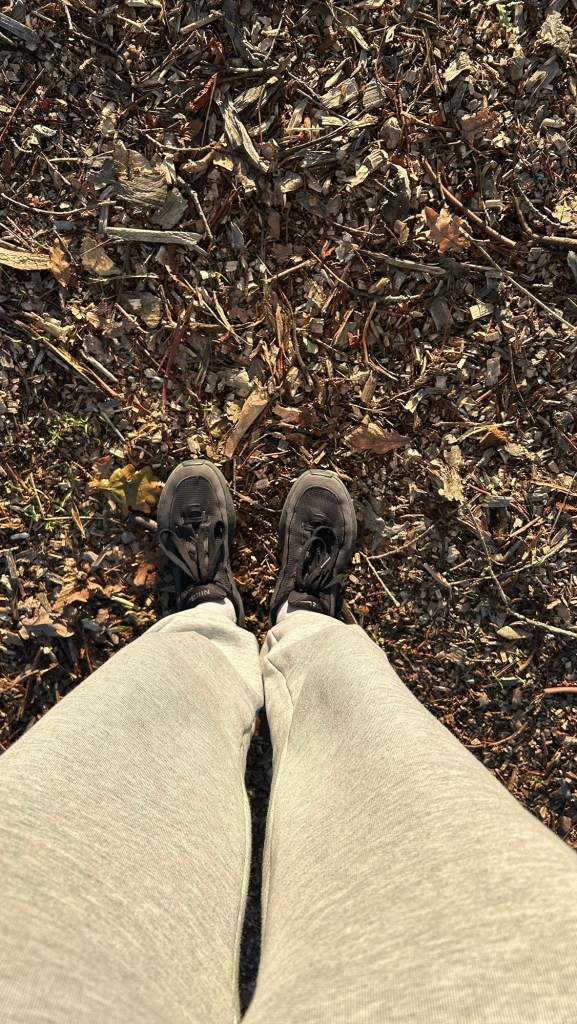
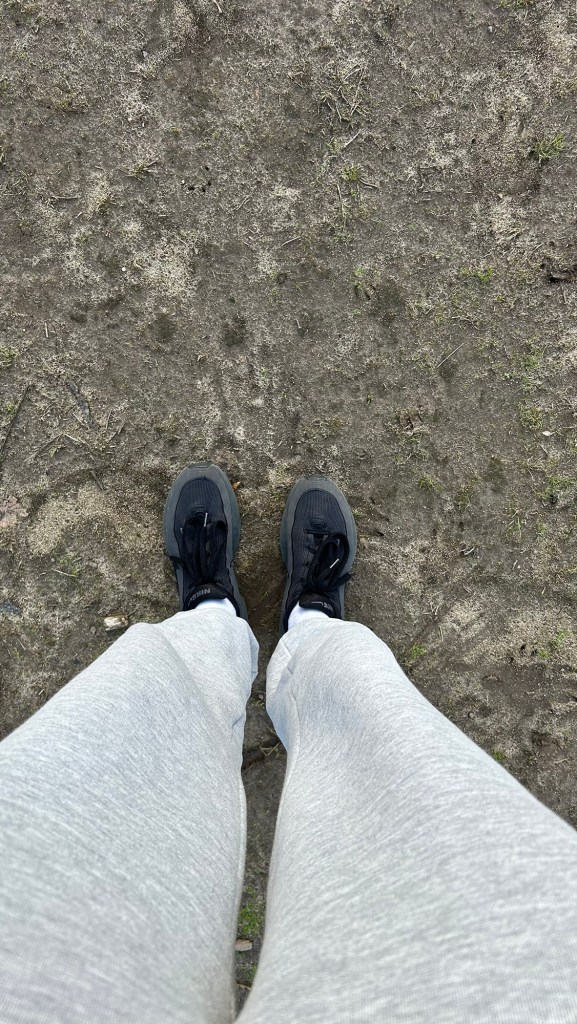
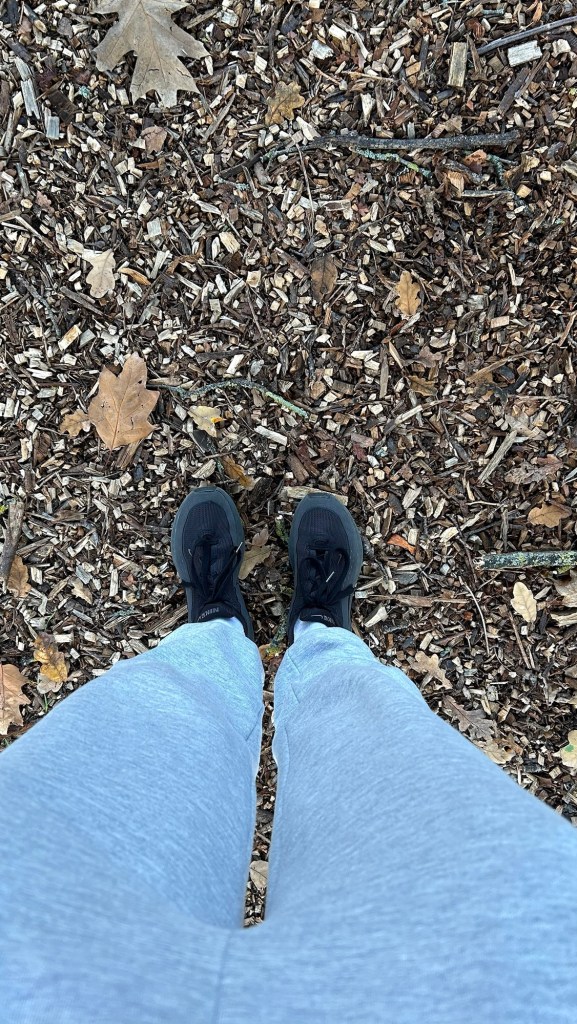
I took these photographs in Walpole Park on the same day. My main idea was to capture different types and conditions of ground within one park. I included my trousers and shoes in each photograph to show that the pictures were taken in the same place and on the same day, rather than being a random collection of images.
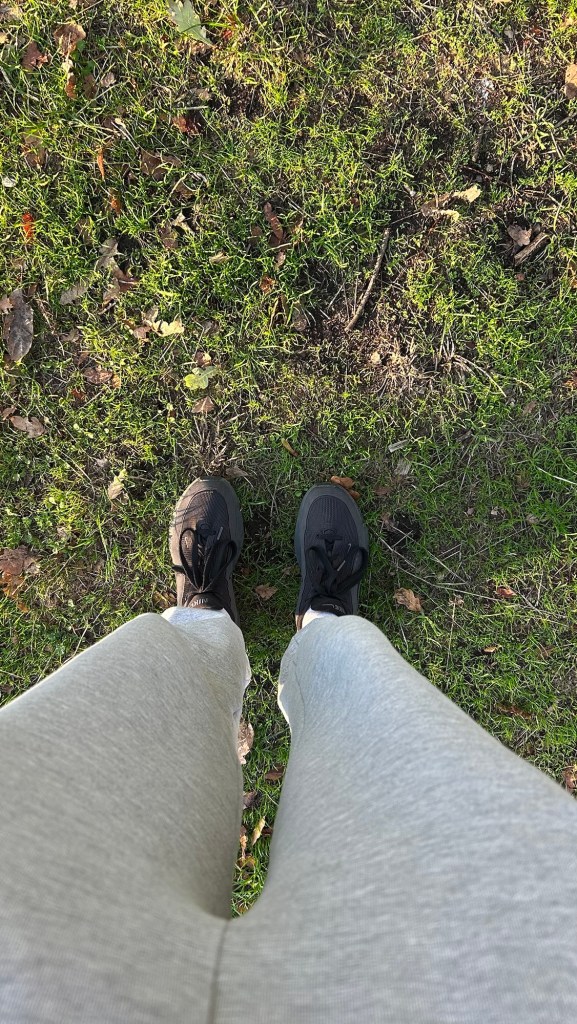
However, when I reviewed my photographs, I noticed that not only the ground had changed in appearance, but also the sunlight, shadows, and surface colours affected how the images looked. The colour of my trousers appeared different in each photograph, with some looking warmer and others cooler.
Two of the photographs look similar, even though I took them in different places. At first, I did not notice that the ground had similar conditions. Instead, the lighting made them look different, with one photograph appearing warmer and the other cooler. This helped me realise how much lighting can change the appearance of colours and surfaces.
This made me think about colour theory, particularly seasonal colour analysis, which categorises colours into four seasons: winter, summer, autumn, and spring. This theory is often used to identify which clothing colours complement a person’s skin tone.
Through this experiment, I noticed how lighting can influence colour perception and how different colours can blend together naturally. Even though I wore the same trousers and took all the photographs in the same park on the same day, each image created a slightly different visual effect because of the surrounding environment and lighting conditions.
Individual Photograph Analysis
The colour of the grass attracts most of the attention, making my trousers become the background of the photograph. In contrast, the asphalt reflects the sunlight and draws attention to itself without overpowering the trousers. Instead, the sunlight creates an interesting play of light and shadow across the fabric.
The wood chips on the second picture appear larger and the light makes them look more golden-brown with warmer sunlight creating stronger highlights. The picture has no single focal point, as the many small details compete for attention. The sunlight gives the whole image a warm, brown tone.
The wood chips in the fourth picture look smaller and lighter due to the lighting, with more grey-brown tones creating a cooler, more muted appearance.The cooler lighting gives my trousers a bluish tint, making them appear almost blue and creating a contrast with the warmer colours of the ground.
The final picture I am discussing, although it is not the last in the sequence, shows a compacted soil surface. In contrast to the other pictures, the grey-brown ground creates a subtle background that draws attention to my trousers, allowing their light colour to stand out.
I arranged the photographs so that they complement each other without overshadowing one another. I described them in a way that allows me to compare their differences and highlight the contrasts between the images, particularly in lighting, colours and visual focus.

